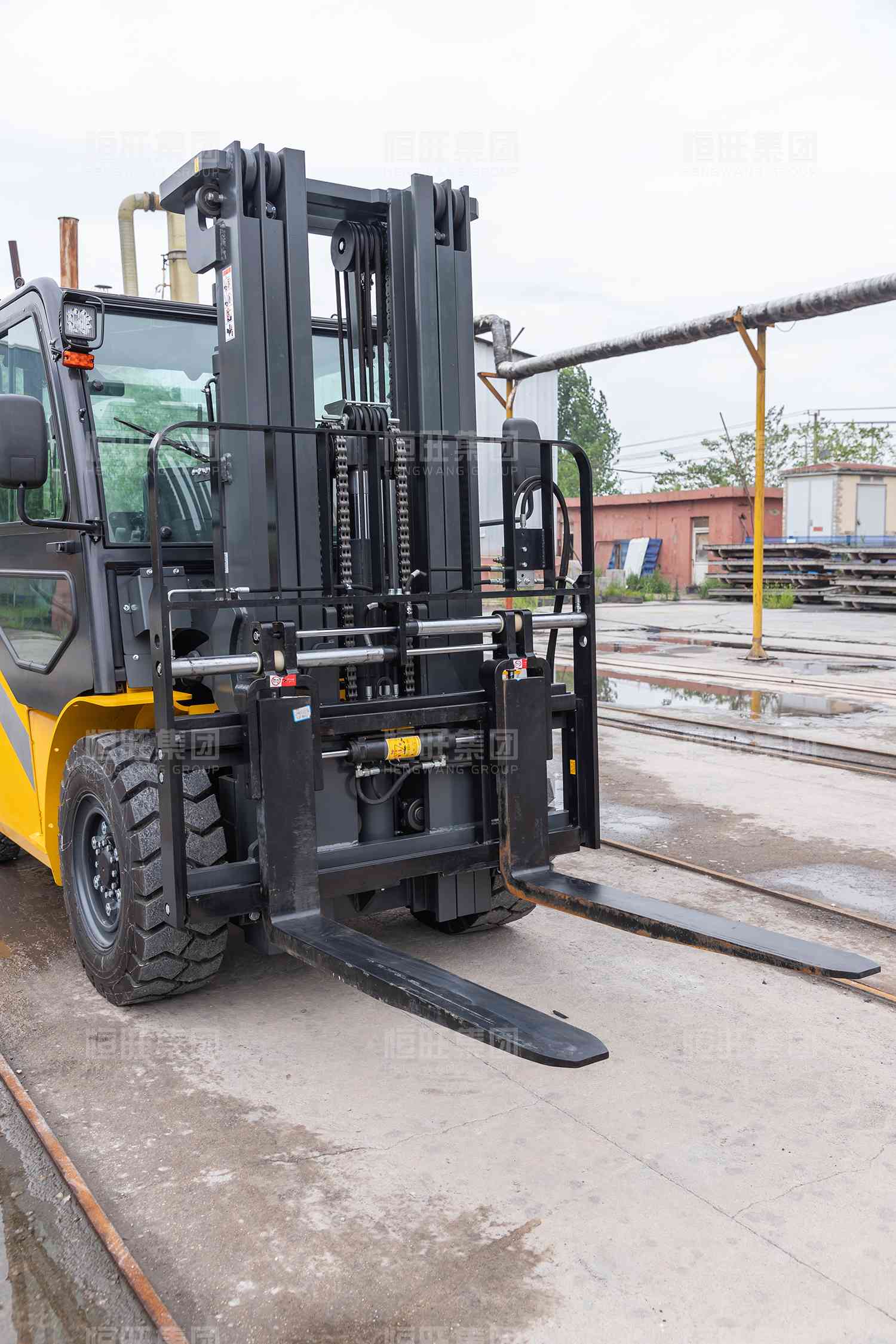
1. The Role of a Forklift Mast
The mast is mounted at the front of the forklift and uses a hydraulic system to raise and lower the forks for material handling. It typically consists of uprights, guide rails, chains, and hydraulic cylinders, directly influencing the forklift's lifting height and stability.
2. Common Forklift Mast Types
Simplex (Single-Stage Mast)
Simplest structure with a single upright, suitable for low-height operations.
Pros: Low cost, high stability, but limited lifting height.
Duplex (Two-Stage Mast)
Two uprights allow for higher lifting, ideal for standard warehousing.
Pros: Good visibility, strong maneuverability, most widely used.
Triplex (Three-Stage Mast)
Three uprights with "free lift" capability (forks can rise before the mast extends), perfect for low-clearance spaces (e.g., container loading).
Pros: Flexible for high stacking, compact when retracted.
Quad (Four-Stage Mast)
Four uprights enable the highest lifting capacity, suitable for extra-tall warehouses.
Cons: Complex structure, higher cost, and maintenance requirements.
3. Key Mast Selection Parameters
Maximum Lifting Height – Must match shelf or stacking requirements.
Retracted Height – Affects whether the forklift can fit through doors or into containers.
Free Lift Height – Determines operational flexibility in confined spaces.
4. How to Choose the Right Mast?
Warehouses/Storage Yards: Duplex (standard needs) or Triplex (high stacking).
Containers/Low-Clearance Areas: Prioritize Triplex (free lift feature).
Extra-Tall Warehouses: Quad mast (consider cost and maintenance).
Height Restrictions: Focus on retracted height to ensure passage.
5. Professional Recommendation
Hengwang offers customized mast solutions based on operational needs (e.g., shelf height, load capacity, space constraints) to ensure optimal performance. For selection support, feel free to contact us.
Conclusion
Mast selection should balance height, flexibility, and cost based on actual work requirements to maximize forklift efficiency.